CHELTENHAM ZEN
  • Home
  • Approaches to meditation
    • Beginners
    • Mindfulness >
      • Introduction
      • Video course
      • Practising mindfulness
    • Early Buddhism >
      • Introduction
      • Jhana
      • Insight practice
      • Brahmaviharas
      • In Buddha's Wake
    • Zen >
      • Introduction
      • Koans
      • Silent Illumination
      • Energy practices
      • Resting in the Unborn
  • Teaching
  • Resources
    • Articles >
      • Index of articles
      • Writings
    • Books >
      • Beginners: Pathways of Meditation
      • Zen: Resting in the Unborn
      • Early Buddhism: In Buddha's Wake
    • Audio
    • Mailing list

Gut instinct

1/4/2023

0 Comments


Connecting with our intuition
Picture
Nanquan said, 'Mind is not Buddha, knowledge is not the Way.'
This week we're looking at case 34 in the Gateless Barrier - and if you think it looks a lot like the previous koan, case 33, you'd be right! So this week we'll go in a slightly different direction and look at intuition and the Zen ideal of how a person should be put together. I've even made pictures! So without further ado, let's get into it.

Knowledge is not the Way?

​In the previous case, we saw Zen master Mazu rejecting his earlier saying, 'The very mind itself is Buddha', and instead taking the more contrarian stance 'Not mind, not Buddha'. This week Nanquan cranks the handle even further, telling us not only that 'mind is not Buddha', but furthermore that 'knowledge is not the Way'.

I've also seen the second phrase translated as 'wisdom is not the Way', which is even more subversive. If we've been hanging around in Zen circles for a while, we might have got the idea that intellectual, scholarly 'knowledge' is not what Zen is all about - rather, we're supposed to do Zen meditation practices, like koan study and Silent Illumination, in order to have insights and cultivate... wisdom... right? Isn't wisdom the point of all this? Wisdom, after all, is one of the six Mahayana virtues (paramitas, along with generosity, ethical conduct, patience/forbearance/endurance, energy and concentration/focus). And yet here's Nanquan, telling us that even wisdom isn't the way to the Way? So what the heck are we supposed to do, then?

Zen's view of the ideal person

Before we answer that directly, let's take a moment to look at Zen's idea of a well-put-together person. This is something I've heard my Zen teacher Daizan talk about many times, although it's taken a while to sink in to my thick skull, for reasons that will become apparent as we get into the details!

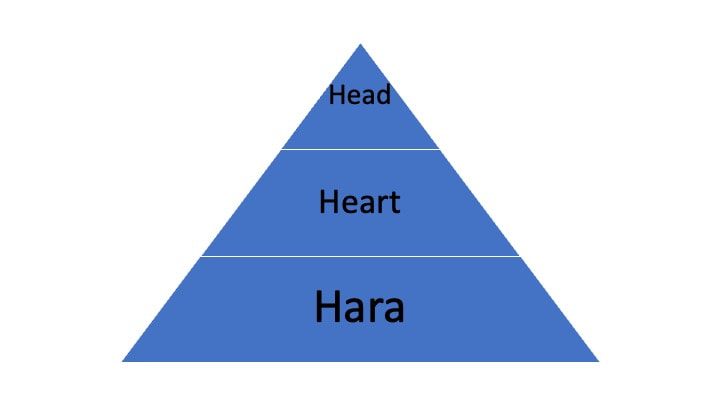
This way of looking at a person divides the body into three sections - head, heart and hara (lower abdomen) - corresponding to the three major energetic centres of the body (upper, middle and lower tanden/dantien). Let's take each one in turn, look at the attributes associated with each section, and see what happens when that aspect of the person is overdeveloped and hence too dominant.
Picture
Picture
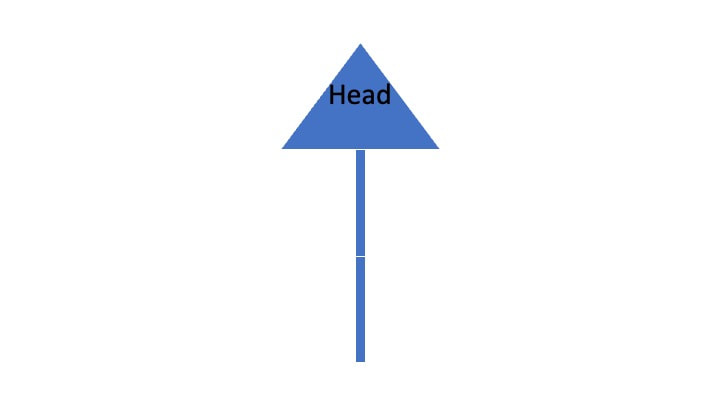
First, we have the head. This is associated with reason, intellect, book-learning, philosophy and so on. People who like to think a lot tend to have a well-developed head - perhaps over-developed, in Zen's view. This is me all over - I studied maths at university and went on to a job in technology research, where I've been happily employed for two decades now. I enjoy philosophy and spend far too much time on retreat coming up with clever systems to organise and unify all the different meditation techniques I've encountered, rather than actually practising meditation.

Now, it's very important to say that Zen does not regard the head area, thoughts or rationality as bad. We're not trying to 'stop thinking', 'get rid of thoughts' or 'abandon rationality'. The thinking mind is a powerful tool - thanks to our ability to think, study and reason about the world, we've made tremendous advances in medicine, technology and science. On a more practical level, the mind is a superb tool for solving the problems that inevitably come up in the course of our lives. Having the thinking mind developed at least to some degree is a powerful asset.

That said, while the thinking mind is a powerful tool to have at our disposal, it doesn't do such a good job of running the whole show. The thinking mind's job is to separate and compare, and when we live from that place, we can't help but see a disconnected world of isolated parts, some better than others - and as a consequence feel a kind of existential separation from the world around us. A major theme in Zen practice is to reintroduce us to another way of seeing the world, one in which things aren't separate at all. And because the thinking mind's job is to split things apart, it's impossible to use the thinking mind to reach this place of wholeness. Thus, as master Nanquan says, 'knowledge is not the Way' - and 'wisdom' might not be the Way either, if what we mean by 'wisdom' is a kind of 'accumulated spiritual knowledge'. The thinking mind is forever looking for a way back in, a way to reassert its supremacy - and this kind of sneaky view of 'wisdom' can be a very effective vehicle.

The head area is also important on an energetic level. Many spiritual practices aim to bring energy (qi/ki/prana/etc.) up to the head/upper tanden/dantien, because this is commonly associated with (often dramatic) spiritual experiences - sudden shifts into experiences of non-duality, bright lights, visions, all kinds of fun stuff. And this is true - but we have to be really careful here. There are several reasons why I've drawn the head as the smallest triangle at the top of a pyramid, and one reason is that the head has the least capacity to deal with energy sloshing around.

The upper tanden is highly sensitive, and if you overcook it, you'll encounter a series of increasingly severe problems:
  • Racing thoughts
  • Headaches
  • Migraines
  • Blinding, incapacitating pain
  • Severe, debilitating breaks with 'consensus reality' (i.e. psychotic episodes)

As you can see, this stuff can get really serious - it's all fun and games until you lose touch with reality or wind up unable to move for days at a time due to the pain in your head. So we want to be very careful about shoving too much energy up into the head, particularly if your system hasn't been prepared for it through extensive energy work beforehand.

If you find that your meditation practice leads to headaches or worse, and these persist for more than a couple of weeks, please seek help. Occasional aches and pains and feeling out of sorts will come and go in the course of a meditation practice for most people, but if it's been happening for a few weeks and shows no sign of going away, I strongly recommend you don't try to 'push through it' - persistent pain or other on-going problems most likely indicate an imbalance in your practice, and that isn't something that will automatically fix itself.
Picture
Picture
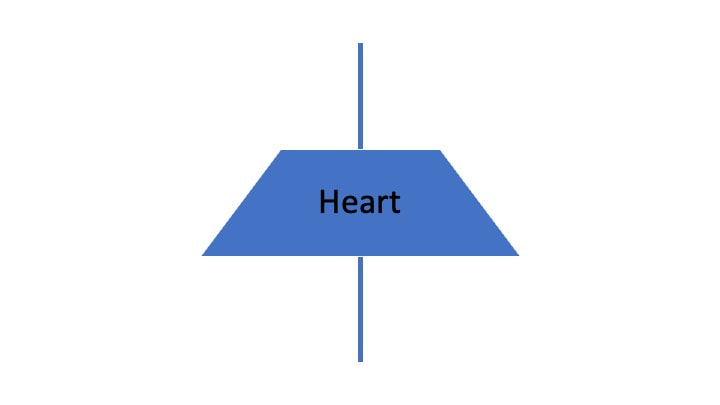
The second major area of the body is the heart. This is associated with the emotions. If the heart area is underdeveloped, a person is likely to be pretty emotionally shut down. Heart-opening practices like loving kindness, compassion or appreciative joy may be very helpful, although it's also quite likely that the person won't be drawn to them by nature. On the other hand, if the heart area is overdeveloped, the emotions end up running the show - life may become very dramatic, a constant soap opera of love, betrayal, tragedy and so forth, or flighty and unstable, with the person flitting from one thing to the next according to the whims of their moment-to-moment emotions, never really sticking at anything long enough to see benefit from it. In this case, the practice of equanimity may be more appropriate.

As I've noted on several occasions, Zen tends not to make a big deal about the heart one way or the other (it spends much more time criticising overly intellectual people!). Early Buddhism has a much stronger emphasis on heart-opening practices. Typically, Zen prefers to allow the heart to open and stabilise of its own accord. A practice like Silent Illumination does help to cultivate equanimity, and when any of the four Brahmaviharas are developed strongly enough, the others do tend to come along for the ride. But this can take time, and personally I've found it very helpful to have the specific practices from early Buddhism at my disposal as well.

On an energetic level, the heart (middle tanden) has a greater capacity than the head to hold energy, but less than the hara (which we'll talk about next). An excess of energy in the heart area can lead to highly amplified, unstable emotions. We may find that our baser desires (survival, power, sex, status etc.) begin to infiltrate the heart, skewing our sense of ethics in ways that can become deeply problematic and harmful if not addressed. To make matters worse, these problems tend to be subtler and more insidious than the problems associated with the head area. If you find you get blinding pain in your head, you're likely to be motivated to do something about it. But if you find that your sex drive is a little higher than normal and you're a little more competitive than usual, it's very easy to rationalise those away as healthy parts of human nature. Having a good source of external feedback is an invaluable resource on the spiritual path - to put it bluntly, having friends who will call you out if you start behaving badly. Where matters of the heart are concerned, we're not always able to see clearly what's going on for ourselves.
Picture
Picture
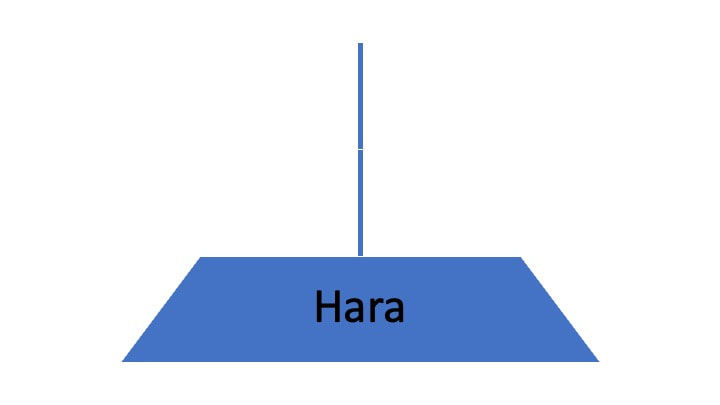
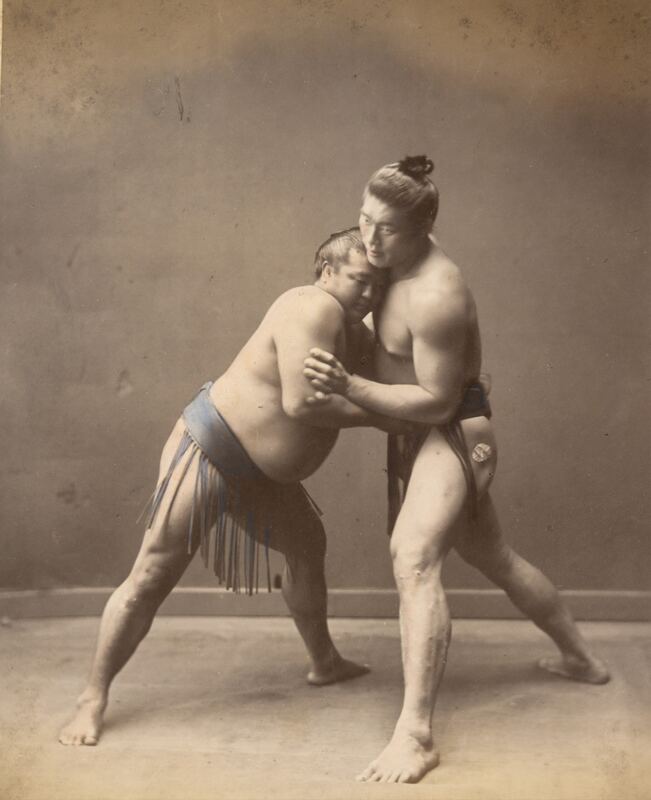
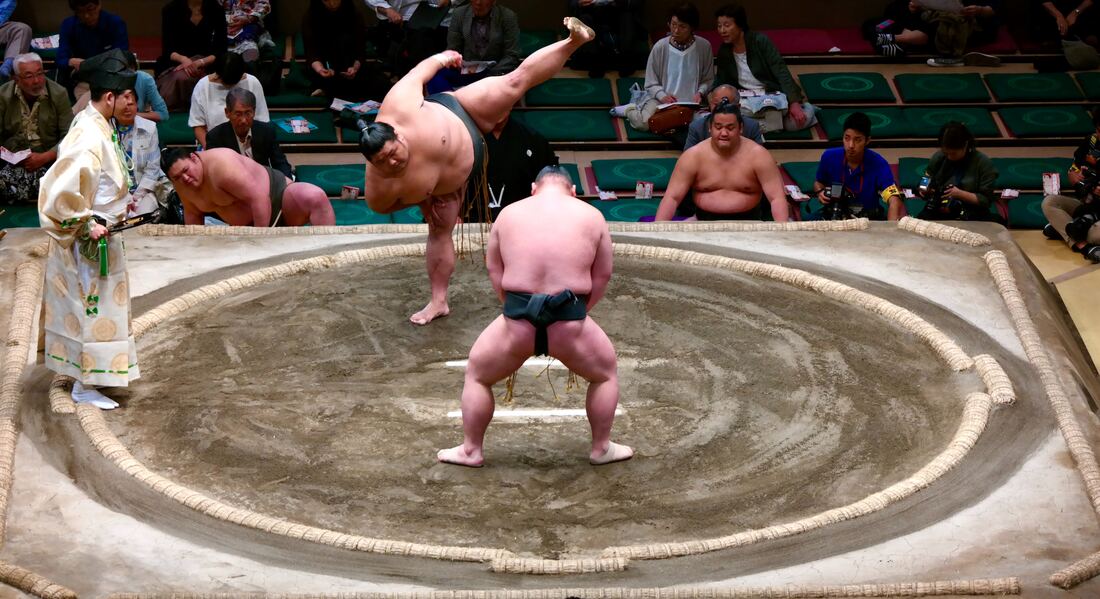
The third area is the hara. This is a Japanese term that doesn't really have a direct equivalent - because, in Western society, we prize emotions and the heart very highly, and the intellect and the head to some extent, but we don't really talk much about this third dimension of being. The closest word we have is 'guts', which might sound a bit crude but does a pretty good job. On a physical level, the hara is the lower abdomen; on a psychological level, a well-developed hara is associated with 'gutsiness' - grit, determination, staying power, groundedness, the willingness to keep going despite difficulties. Perhaps the clearest exemplar of the hara-dominant person is a sumo wrestler - as my Zen teacher Daizan puts it, 'a belly on legs'.

The hara is also associated with intuition - again, we have the corresponding phrase 'gut instinct' in English. (As an aside, scientists are now studying the so-called 'gut brain', aka the enteric nervous system. It's the second largest concentration of nerve cells in the body after the brain, and has a profound influence on how our mind-body system as a whole operates.) And here we see a connection back to this week's koan. Master Nanquan tells us that 'knowledge/wisdom is not the Way', and as I noted above, we can't use our thinking mind to separate and compare our way to wholeness. Zen practice (and other hara cultivation methods) instead places great emphasis on the exploration of 'spontaneity' - connecting to what's going on around us on a more intuitive level, following the body's lead, and so on. Within Rinzai Zen we have a practice of 'spontaneous movement' which aims to tap into this aspect of our being - I'm very much a novice in this arena, but Daizan has an inexpensive video introduction to spontaneous movement available through the Zenways website. I'd definitely recommend it.

On an energetic level, the hara (lower tanden) is the primary 'battery pack' of the body. A lot of the old texts simply assume that we all have well-developed haras and can rely on it to handle large amounts of energy from day 1, but actually these days that really isn't the case. Many of us spend a huge amount of time in heady and hearty pursuits, and don't necessarily have the best relationship with our physical bodies, let alone a well-developed tanden capable of holding large amounts of voltage. So it can be tremendously valuable to spend some time engaging in a practice that actively cultivates the hara.

A good start is to do a practice like the ah-un breathing described in this article and in guided form on my Audio page for at least a month. That will get you connected to your hara in a tangible way - the biggest obstacle to energy practices is that, at first, people often can't feel anything going on, and after a while they either give up or move on to something which does have a more pronounced physical effect, but which the system may not yet be sufficiently conditioned to handle. Other good practices to lay a foundation include naikan and soft ointment, also described in that article and available in guided form. Personally, I'd recommend spending a hundred days just on these practices before moving on to something like the energy circulation of the microcosmic orbit, just to be on the safe side, although that's probably overly cautious for most people. Nevertheless, it's really important to have a well-developed hara before going much further. Ki/qi tends to want to rise, and if the hara isn't sufficiently well developed to keep it anchored down in the belly where the body has enough capacity to hold it, you can look forward to racing thoughts, headaches and so forth - scroll back up and re-read the head section to see what can go wrong if you skip this step!
Picture
Picture
​The final picture shows Zen's 'ideal person'. We have some development in the head, a greater development in the heart, and the greatest development in the hara. That corresponds to someone who is able to solve problems when necessary but can then put down the thinking mind when it isn't needed; someone who has a full, healthy range of emotions but is not dominated by them; and someone who is solid, grounded, intuitively wise and able to keep going no matter what life throws at them.

Sounds pretty good, doesn't it?

May we all become triangular people!
0 Comments

Your comment will be posted after it is approved.


Leave a Reply.

    SEARCH

    Author

    Matt teaches early Buddhist and Zen meditation practices for the benefit of all. May you be happy!

    Archives

    June 2025
    June 2024
    December 2023
    November 2023
    October 2023
    September 2023
    August 2023
    July 2023
    June 2023
    May 2023
    April 2023
    March 2023
    February 2023
    January 2023
    December 2022
    November 2022
    October 2022
    September 2022
    August 2022
    July 2022
    June 2022
    May 2022
    April 2022
    March 2022
    February 2022
    January 2022
    December 2021
    November 2021
    October 2021
    September 2021
    August 2021
    July 2021
    June 2021
    May 2021
    April 2021
    March 2021
    February 2021
    January 2021
    December 2020
    November 2020
    October 2020
    October 2019
    September 2019
    April 2019
    February 2019
    January 2019
    December 2018

    Categories

    All

    RSS Feed

  • Home
  • Approaches to meditation
    • Beginners
    • Mindfulness >
      • Introduction
      • Video course
      • Practising mindfulness
    • Early Buddhism >
      • Introduction
      • Jhana
      • Insight practice
      • Brahmaviharas
      • In Buddha's Wake
    • Zen >
      • Introduction
      • Koans
      • Silent Illumination
      • Energy practices
      • Resting in the Unborn
  • Teaching
  • Resources
    • Articles >
      • Index of articles
      • Writings
    • Books >
      • Beginners: Pathways of Meditation
      • Zen: Resting in the Unborn
      • Early Buddhism: In Buddha's Wake
    • Audio
    • Mailing list